From Fragmentation to a Shared Future: Africa’s Bold Step Toward a Unified Digital CRVS Architecture
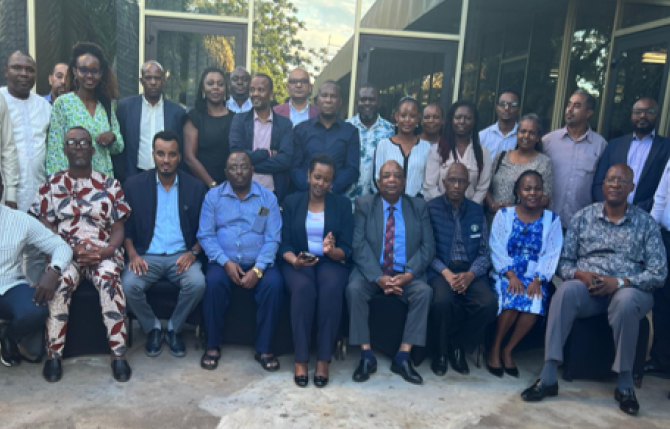
Between 27 April and 1 May 2026, Africa’s Civil Registration and Vital Statistics (CRVS) community advanced their step toward reshaping the continent’s digital identity landscape. In a Technical Workshop held in Harare, Zimbabwe, on the review and validation of the African eCRVS Shared Asset (ACSA) framework, CRVS experts, Registrar Generals, Regional Institutions, and Development Partners convened under the stewardship of the United Nations Economic Commission for Africa (UNECA), UNICEF and Vital Strategies.
What emerged was not merely a technical validation exercise, but a collective affirmation of a new paradigm for CRVS systems in Africa, one anchored in shared standards, interoperability, and African ownership.
At its core, the ACSA initiative responds to a long-standing structural challenge: fragmented, vendor-dependent, and limited interoperability of CRVS systems. While many African states have made significant strides in digitising civil registration processes, these efforts have frequently evolved in isolation, producing systems that are costly to maintain, and uneven in performance. It is positioned as a continental digital public good designed to address this fragmentation-not by replacing national systems, but by providing a common framework that defines how CRVS systems should function, interoperate, and be evaluated.
Over five days, representatives from eleven Advisory Board member countries, together with technical working groups and partners, validated the foundational building blocks of the framework. This included Eighteen (18) functional use cases spanning the full civil registration lifecycle, from declaration and registration to certification, amendments, duplication management, and vital statistics production. Of these, nine were classified as essential “Must-have” capabilities, emphasizing a shared recognition of the non-negotiable features required for trustworthy, secure, and inclusive CRVS systems.
Equally significant was the validation of the framework’s non-functional requirements, which define the quality and resilience of CRVS systems. Drawing on empirical insights from countries such as Rwanda, Kenya, Zambia, Benin, Angola, Ethiopia, and Ghana, participants highlighted concrete benchmarks for performance, security, interoperability, scalability, and availability. Discussions moved beyond abstract principles to grounded realities such as offline functionality in low-connectivity environments, the need for robust audit trails and the importance of formal disaster recovery standards (RTO and RPO) in safeguarding legal identity data.
A defining feature of the Harare workshop was its strong grounding in country experience. Insights drawn from across the continent highlighted the diversity of CRVS system architectures: from highly integrated digital platforms to evolving API-driven and hybrid mobile models. These experiences, while serving as practical reference points, revealed the progress achieved, constraints and the complexities of system transformation. It also reinforced that even though there may not be a single model of success, shared standards can enable different systems to interoperate effectively.
Beyond technical validation, the workshop also advanced key governance and implementation directions. Participants endorsed a phased implementation strategy built around country self-assessments, recognising that countries are at different stages of digital maturity. Three pathways were identified: enhancement of existing systems, structured assessment-led improvement, and full implementation for countries building from the ground up. This pragmatic approach positions ACSA not as a rigid template, but as a flexible instrument for incremental transformation.
The next phase will begin with six pilot countries undertaking structured baseline assessments using a newly developed digital tool. These pilots will generate gap analyses to inform national implementation pathways and provide critical feedback for refining the framework.
As the workshop concluded, a clear trajectory emerged. The coming months will focus on finalising documentation, translating key tools into different languages to ensure linguistic inclusivity and launching pilot implementation. These steps mark the transition of ACSA from conceptual design to operational reality.
For the global CRVS community of practice, ACSA represents more than a technical framework. It signals a shift toward collective standard-setting in a domain long shaped by fragmentation. It is an invitation to rethink how digital public infrastructure can be governed through shared norms, interoperable systems, and sustained collaboration across borders.
If successfully implemented, ACSA has the potential to do more than improve registration systems. It could strengthen the visibility of populations across Africa, enhance access to services, and ensure that every vital event is counted in national statistics. In doing so, it brings the continent closer to a future where legal identity is not a privilege of geography, but a guaranteed public good.